The restaurant and hospitality industry has undergone a dramatic transformation in recent years. Outdoor dining, once considered a seasonal bonus, has become a year-round expectation. Commercial operators are discovering that retractable glass systems are one of the most effective investments they can make -- not just for aesthetics, but for their bottom line.
The Business Case for Retractable Glass
The numbers speak for themselves. Restaurants and bars that install retractable glass enclosures typically see a 30 to 50 percent increase in usable seating capacity. Outdoor patios that were previously unusable during rain, wind, or cold months can now operate year-round with full weather protection.
Beyond the additional seats, operators consistently report higher per-table spending in enclosed outdoor areas. Guests perceive these spaces as premium, and the ambiance created by transparent glass walls with panoramic views commands higher check averages.
- Revenue Extension: Convert seasonal outdoor spaces into 12-month dining areas
- Permit Advantages: In many jurisdictions, enclosed outdoor spaces qualify for different permitting categories than permanent construction
- Flexibility: Open the walls on beautiful days, close them when weather turns -- all at the push of a button
- Energy Efficiency: Reduce HVAC costs compared to fully open patios with space heaters
Types of Commercial Glass Systems
Guillotine Glass (VitraLift Glasswall)
Vertical sliding glass panels that disappear upward into a minimal header. These systems provide a completely frameless, unobstructed view when closed and a fully open space when retracted. Motorized with Somfy motors, they can be operated individually or as a group. This is the premium choice for restaurants seeking the most elegant, architectural solution.
Retractable Roof Pergolas (Stratos System)
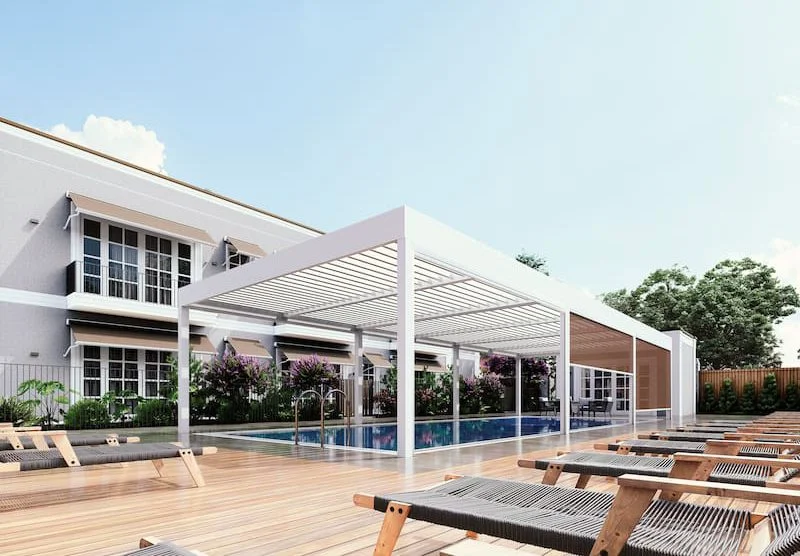
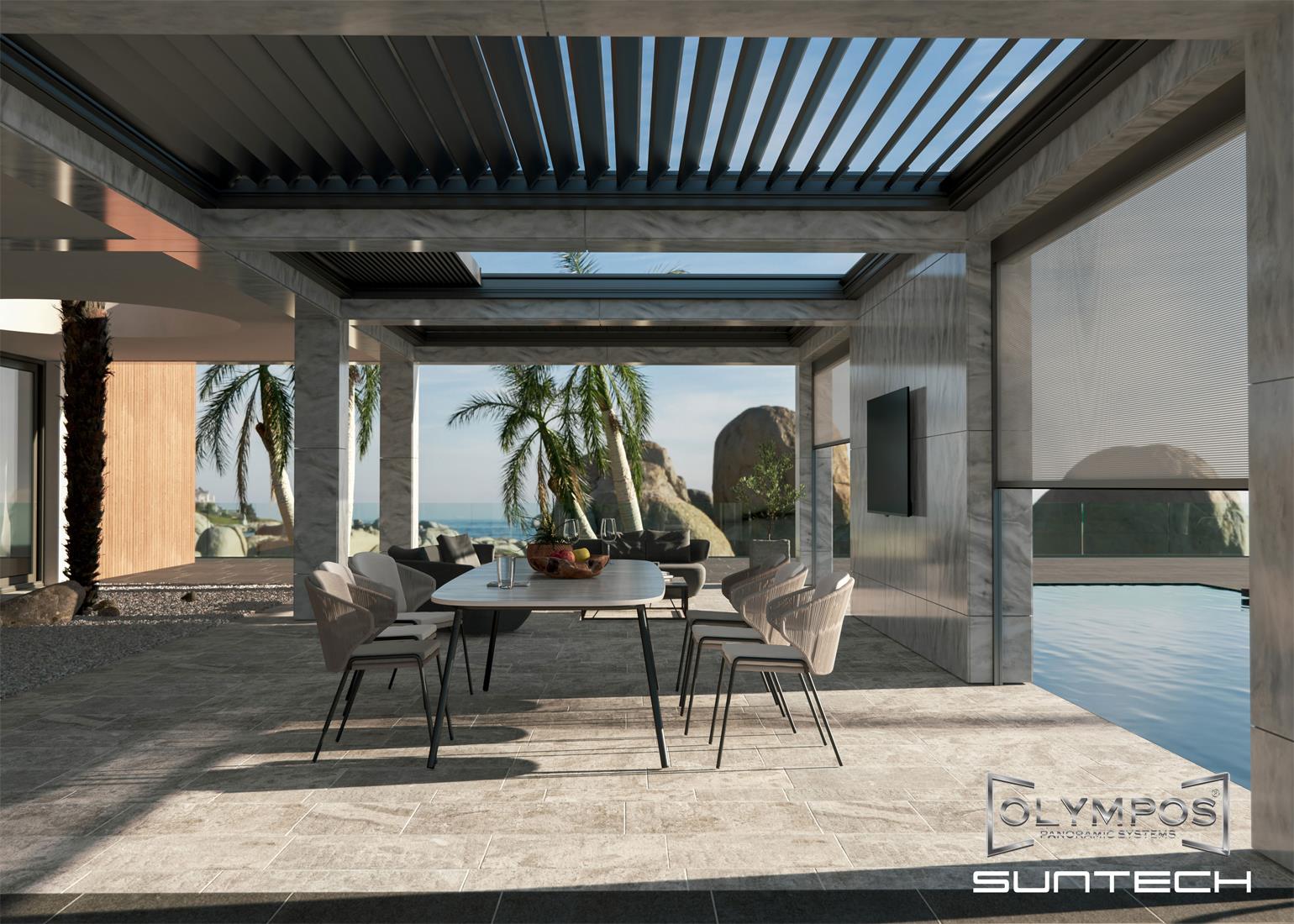
Overhead coverage that retracts at the touch of a button. The Stratos system features waterproof fabric panels, integrated LED lighting, and automatic rain and wind sensors. Perfect for creating covered outdoor dining that still feels open and airy. Often combined with glass walls for a complete enclosure.
Ventus Screen Systems
The most cost-effective option for adding weather protection. Zip screens lock into side channels for superior wind resistance (up to 75 mph) and can be combined with glass walls or pergolas. Ideal for casual dining environments or as a supplementary system. Available in dozens of fabric options from Serge Ferrari and Soltis.
Key Design Considerations
Successful commercial installations require careful planning. Here are the factors that separate a great project from a problematic one:
- Building Codes and Zoning: Every municipality has different requirements for outdoor enclosures. Some classify retractable systems differently than permanent construction, which can simplify permitting. Work with your provider to understand local regulations before committing to a design.
- ADA Compliance: Enclosed outdoor spaces must meet accessibility requirements. Floor-level thresholds, adequate clearances, and accessible seating locations should be designed from the start.
- HVAC Integration: Determine whether you will use radiant heaters, mini-splits, or rely on the enclosure alone. Glass systems provide significant wind protection and heat retention, but fully enclosed spaces in extreme climates may need supplemental heating or cooling.
- Lighting and Electrical: Plan for integrated LED lighting in pergolas, dedicated circuits for motorized systems, and ambient lighting that complements the glass.
- Drainage: Water management is critical. Pergola systems include integrated guttering, and glass walls should be installed with proper drainage channels to handle rain runoff.
Real-World Applications
Restaurants and Cafes
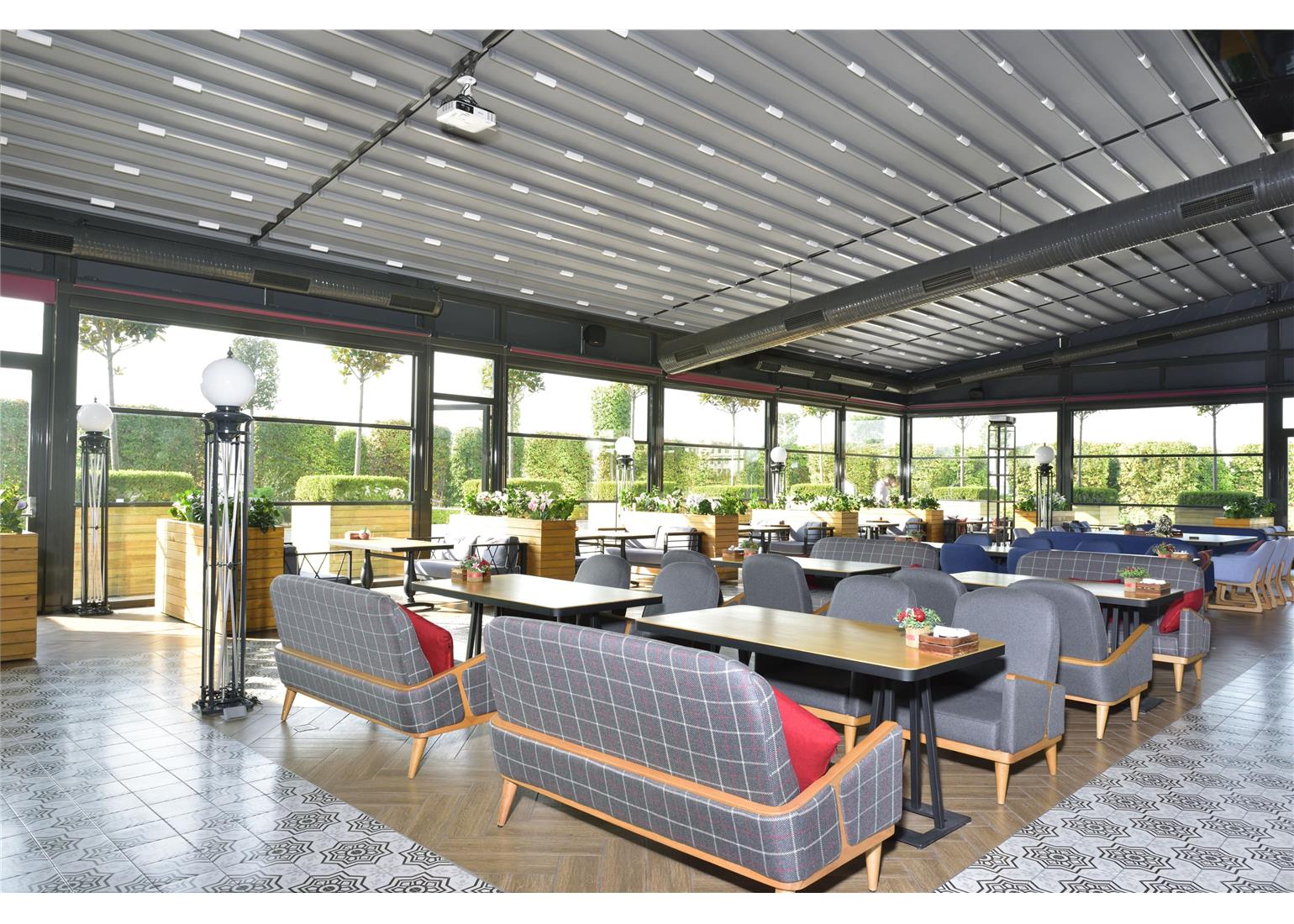
The most common commercial application. Retractable glass transforms sidewalk cafes, rooftop terraces, and garden patios into premium dining destinations. Operators can charge higher prices for enclosed outdoor seating and accommodate guests in any weather.
Rooftop Bars
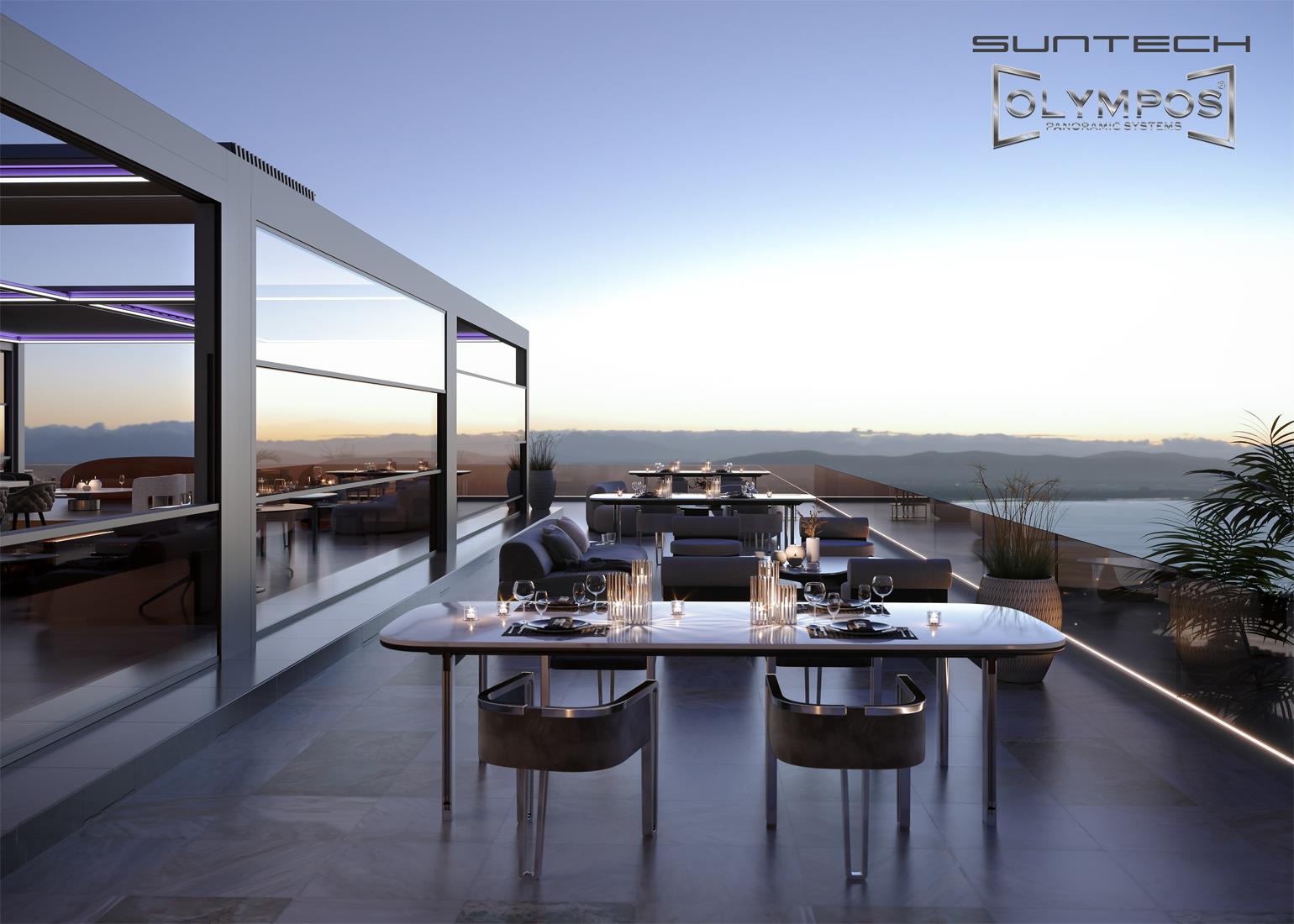
Rooftop venues face the greatest exposure to wind and weather. A combination of glass walls and a retractable roof creates a stunning space that operates rain or shine while preserving the open-air experience on clear nights.
Hotels and Resorts
From pool enclosures to lobby extensions, hotels use glass systems to create flexible, multi-purpose spaces. Guest satisfaction scores consistently improve when outdoor areas are usable regardless of weather.
Event Venues
Glass enclosures allow event venues to offer weather-guaranteed outdoor experiences. Weddings, corporate events, and private parties can be held with confidence, knowing that rain plans are built into the architecture.
Choosing the Right System
The best system for your project depends on several factors:
- Define Your Objectives: Are you primarily looking for weather protection, noise reduction, pest control, or all three? This determines whether you need glass walls, a roof system, screens, or a combination.
- Evaluate the Site: Measure the space, consider structural supports, assess sun exposure and prevailing wind directions. A site assessment (typically 60 to 90 minutes) should be the first step.
- Set a Budget: Systems range from $8,000 for zip screens to $50,000+ for comprehensive glass and pergola installations. The right provider will offer solutions across the budget spectrum.
- Work with an Experienced Provider: Commercial installations are more complex than residential. Look for a company with a proven track record in commercial projects, engineering capabilities, and nationwide installation teams.
At Olympos Panoramic Systems, we have completed over 500 commercial and residential projects across all 50 states. Our team handles everything from initial design consultation through engineering, permitting assistance, and professional installation.
Ready to Transform Your Commercial Space?
Schedule a free consultation with our commercial projects team. We will assess your space, discuss your goals, and provide a detailed proposal.
Get Free Consultation →